

The modern industrial landscape is undergoing a massive transformation. Driven by the relentless demands of global supply chains, e-commerce fulfillment expectations, and stringent safety regulations, warehouses and manufacturing plants can no longer operate as simple, static storage boxes. Today’s industrial properties must function as dynamic, high-efficiency machines where every square foot is optimized for throughput, safety, and energy conservation. For building owners, facility managers, and real estate investors, relying on outdated infrastructure is a guaranteed path to shrinking profit margins and operational bottlenecks.
Strategic physical infrastructure improvements are no longer optional; they are a critical necessity that yields a massive return on investment over the lifecycle of the building. Upgrading your facility from the ground up mitigates the risk of catastrophic downtime, reduces exorbitant energy overheads, and protects your most valuable assets—both your inventory and your workforce. When a facility is plagued by fluctuating interior temperatures, degraded staging areas, and failing entry systems, productivity grinds to a halt. Conversely, a modernized building attracts high-tier, long-term commercial tenants who demand peak operational efficiency.
This comprehensive guide serves as a definitive, actionable roadmap for modernizing your commercial properties. We will explore the critical structural, mechanical, and environmental upgrades required to transform an aging warehouse into a state-of-the-art industrial hub. By focusing on the exact technologies and structural enhancements that matter most, you can establish a resilient, efficient, and highly profitable industrial operation.
- Upgrade to High-Cycle, Insulated Rolling Barriers
- Partner with Certified Technicians for Structural Adjustments
- Specify Load-Bearing Pavement and Rigorous Foundation Standards
- Deploy Advanced Thermal Breaks and High-Speed Environmental Seals
- Implement Scheduled Inspections and Rapid Response Solutions
- Conclusion
Upgrade to High-Cycle, Insulated Rolling Barriers
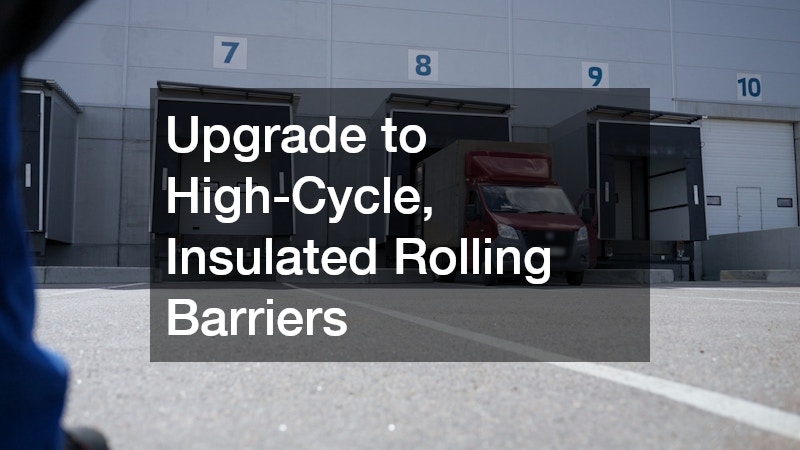
The entry points of an industrial facility are its most vulnerable zones, acting as the primary boundary between controlled interior environments and harsh exterior weather conditions. If your building relies on outdated, uninsulated, or slow-moving entryways, you are continuously hemorrhaging conditioned air. In large-scale fulfillment centers or manufacturing plants, HVAC systems must work overtime to compensate for these massive thermal leaks, driving up monthly utility costs to unsustainable levels. Upgrading your exterior perimeter with advanced barriers is one of the most effective ways to stabilize internal temperatures and slash energy expenditures.
When evaluating your perimeter, you must assess the condition of your main access points and consider transitioning to advanced commercial garage doors engineered with high R-value insulation. Modern insulated systems typically utilize injected polyurethane foam cores sandwiched between heavy-gauge steel panels. This construction not only provides a formidable thermal break but also adds significant structural rigidity, reducing the likelihood of panels denting or buckling under heavy wind loads or minor equipment impacts. The thermal efficiency gained from these upgrades translates directly to the bottom line, particularly in regions that experience extreme seasonal temperature fluctuations.
Beyond thermal regulation, facility security and long-term mechanical durability must be prioritized. A standard counterbalanced overhead door system in a residential setting might operate a few times a day. In contrast, an industrial environment requires a high-cycle spring package explicitly engineered to withstand hundreds of openings and closings per shift without experiencing metal fatigue or catastrophic snapping. Upgrading to heavy-duty gauge steel, integrated weather-stripping, and high-cycle torsion springs ensures that your inventory remains protected from both the elements and potential intruders, all while maintaining the relentless pace of your logistics operations.
Key Features to Look for in Barrier Upgrades:
-
Polyurethane Insulation: Superior to polystyrene, polyurethane provides maximum thermal resistance and structural density.
-
High-Cycle Torsion Springs: Rated for 50,000 to 100,000 cycles, drastically outperforming standard springs that fail after 10,000 cycles.
-
Heavy-Gauge Steel Tracks: Essential to prevent bending and misalignment under the heavy weight of insulated panels.
-
Advanced Weather-Stripping: Bottom astragals, side brushes, and top seals that completely block drafts and pests.
-
Motorized Chain Hoists: Heavy-duty operators that ensure consistent, controlled movement to prevent mechanical shock.
Partner with Certified Technicians for Structural Adjustments
Modernizing the large-scale entryways of a warehouse is not a task for general contractors or in-house maintenance staff. The sheer scale, weight, and kinetic energy involved in industrial mechanical barriers require exact precision and strict adherence to safety protocols. A slight miscalculation in track alignment, improper spring tensioning, or flawed electrical sensor calibration can lead to sudden structural failures, resulting in severe injuries and massive liability issues. Complex industrial installations demand the expertise of highly specialized, certified technicians.
To ensure your facility upgrades are executed flawlessly, it is imperative to source your rolling steel barriers and high-speed fabrics directly from an established commercial garage door company that understands the unique demands of industrial architecture. These specialized vendors do more than just sell equipment; they provide comprehensive site evaluations, custom engineering solutions, and long-term manufacturer warranties. An established vendor will ensure that the specific weight, wind load requirements, and usage frequency of your facility are factored into the design before a single piece of steel is hung.
Furthermore, you must never cut corners during facility expansion or remodeling by delegating the heavy lifting to uncertified crews. You must hire experts who meticulously follow strict architectural and engineering specifications during every heavy-duty garage door installation. Professional technicians are trained to handle the massive stored energy of industrial torsion springs safely. They are also equipped to properly integrate the barrier’s motorized operators with your facility’s fire alarm systems, access control networks, and automated logistics software. When evaluating vendors, look for specialized safety certifications, such as those from the Institute of Door Dealer Education and Accreditation (IDEA) or OSHA-certified safety compliance records, to guarantee a flawless, risk-free upgrade.
Essential Criteria for Vendor Selection:
-
Verified Certifications: Technicians must hold active IDEA certifications and up-to-date OSHA safety training.
-
24/7 Emergency Availability: Industrial operations do not stop at 5 PM; your vendor must offer round-the-clock emergency dispatch.
-
In-House Engineering Support: The ability to custom-design tracking and structural supports for unique warehouse layouts.
-
Comprehensive Liability Insurance: The vendor must be fully bonded and insured to protect your property during major structural work.
-
Integration Capabilities: Expertise in wiring mechanical barriers into centralized building management systems (BMS).
Specify Load-Bearing Pavement and Rigorous Foundation Standards
While walls and ceilings protect your inventory, the exterior pavement is the literal foundation of your supply chain throughput. Severe surface degradation in staging areas, loading docks, and primary access routes is a chronic issue for industrial properties. Constant heavy-haul semi-truck traffic, the tight turning radiuses of multi-ton forklifts, and the extreme stress of fully loaded trailers resting on landing gear can quickly destroy inadequate exterior surfaces. When potholes, severe rutting, and structural cracking are left unchecked, they cause costly damage to vehicle suspensions, delay shipping schedules, and create massive tripping hazards for warehouse personnel.
To mitigate these issues, a strategic approach to exterior surfaces is required. You must invest in professional driveway paving for your main access roads and employee parking sectors, ensuring that a thick, expertly compacted aggregate base layer is laid down to support the anticipated weight. Asphalt is often the preferred choice for long access roads due to its flexibility, ease of maintenance, and ability to expand and contract during freeze-thaw cycles. However, asphalt will quickly fail if the underlying soil subgrade is not properly stabilized or if the aggregate base lacks the correct depth to distribute heavy loads.
In contrast, high-stress zones such as primary loading docks, trailer parking stalls, and dumpster pads require an entirely different engineering approach. For these critical areas, you must construct a reinforced concrete driveway layout capable of withstanding extreme, concentrated point-loads without sinking or cracking. Concrete offers exceptionally high compressive strength, meaning it will not deform or rut during the heat of summer when heavy trailers sit idle for days. By strategically utilizing both asphalt for flexible traffic flow and reinforced concrete for high-stress staging, you ensure a durable, long-lasting exterior that supports relentless logistical demands.
Strategic Pavement Engineering Guidelines:
-
Soil Subgrade Stabilization: Ensure engineers conduct soil testing and compact the earth before any aggregate base is laid.
-
Thickened Edges: Pour reinforced concrete with thickened edges in areas where heavy trucks frequently turn or pivot.
-
Proper Drainage Slopes: Design all pavement to slope away from loading docks and building foundations to prevent water pooling.
-
Steel Rebar Reinforcement: Use a heavy grid of steel rebar or welded wire mesh within concrete pours to prevent structural cracking.
-
High-Strength Mix Designs: Specify commercial-grade concrete mixes with a minimum compressive strength of 4,000 PSI for high-traffic zones.
Deploy Advanced Thermal Breaks and High-Speed Environmental Seals
As modern supply chains become increasingly complex, many industrial properties are required to house disparate internal environments under a single roof. Managing multi-temperature facilities—where ambient dry goods sit merely feet away from refrigerated perishables—presents profound engineering challenges. Failing to properly isolate these zones results in massive energy waste, dangerous condensation buildup, frost accumulation on mechanical parts, and ultimately, catastrophic product spoilage. Upgrading a facility to handle these demands requires deploying highly specialized environmental barriers designed to maintain rigorous climate control without slowing down operational momentum.
To optimize the flow of internal pedestrian and equipment traffic while maintaining strict temperature protocols, it is highly recommended to consult with a specialized commercial door company to install high-speed fabric barriers. These advanced systems are engineered to open and close in mere fractions of a second. By minimizing the amount of time an entryway remains open, high-speed doors drastically reduce the transfer of heat and humidity between zones. When paired with high-velocity air curtains—which blow a powerful stream of air down across the opening—you can effectively create an invisible thermal shield that keeps conditioned air locked inside, even during periods of heavy forklift traffic.
Furthermore, integrating modern cold storage solutions is essential for facilities accommodating food and beverage distribution, pharmaceutical logistics, or bio-tech manufacturing. This goes far beyond simply turning up the air conditioning. Proper integration involves installing specialized insulated metal panel (IMP) systems to create dedicated refrigeration zones, outfitting dock bays with heavy-duty dock seals and shelters to prevent thermal loss during truck loading, and utilizing under-floor heating systems in deep-freeze areas to prevent the foundation from freezing and cracking. Mastering these thermal breaks ensures strict regulatory compliance and protects the integrity of highly sensitive, perishable supply chains.
Critical Upgrades for Multi-Temperature Environments:
-
High-Speed Roll-Up Doors: Fabric barriers that operate at speeds exceeding 60 inches per second to minimize air exchange.
-
Insulated Metal Panels (IMPs): Interlocking, foam-core wall panels that create highly efficient, customizable cold zones.
-
Dock Seals and Shelters: Compression seals that close the gap between the building exterior and a docked trailer.
-
Industrial Air Curtains: Overhead blowers that repel exterior hot air, dust, and flying insects from entering the facility.
-
Automated PVC Strip Curtains: Cost-effective secondary barriers for pedestrian walkways or lower-traffic forklift routes.
Implement Scheduled Inspections and Rapid Response Solutions
The most advanced industrial upgrades in the world will ultimately fail if they are neglected. Transitioning your facility management mindset from reactive damage control to proactive, scheduled maintenance is the final, crucial step in modernizing your property. In a high-volume logistics hub, a minor mechanical failure can halt shipping operations entirely. When a primary loading dock goes down, trucks idle in the yard, supply chain timelines are shattered, and the facility bleeds thousands of dollars per hour in lost productivity. Protecting your physical upgrades requires a rigorous, systematic approach to ongoing care.
Establishing a strict preventive maintenance checklist is vital. Warehouse floor managers must be trained to recognize early warning signs of mechanical wear. They should be empowered to immediately report signs of track misalignment, strange grinding noises, or frayed steel cables so the facility can schedule professional garage door repairs well before a total operational failure occurs. Routine care should include cleaning and lubricating all moving parts, tightening loose hardware vibrating under heavy loads, inspecting dock leveler hydraulics for fluid leaks, and meticulously testing photoelectric safety sensors to ensure compliance with occupational safety regulations.
However, even with flawless maintenance, accidents in a fast-paced warehouse are inevitable. Forklifts collide with tracks, heavy pallets swing into panels, and severe weather can cause unexpected structural damage. To mitigate these emergencies, you must establish a priority service contract with a trusted vendor. Having a guaranteed, rapid-response partner ensures you have access to swift local garage door replacement when panels sustain catastrophic damage. Priority contracts guarantee that highly trained technicians will be on-site within hours, carrying the exact OEM parts required to secure your perimeter and get your operations back online with minimal disruption.
Comprehensive Preventive Maintenance Checklist:
-
Visual Hardware Audits: Monthly inspections of hinges, brackets, track bolts, and anchor points for looseness or stress fractures.
-
Cable and Spring Inspections: Examining heavy-duty lifting cables for fraying and torsion springs for rust or signs of metal fatigue.
-
Lubrication Protocols: Applying specialized industrial-grade lubricants to rollers, bearings, and springs to reduce friction and wear.
-
Safety Sensor Calibration: Testing photo-eye beams, pneumatic bottom edges, and auto-reverse mechanisms to prevent crushing injuries.
-
Dock Leveler Service: Checking hydraulic fluid levels, clearing debris from dock pits, and ensuring the lip smoothly extends into trailers.
Conclusion
Transforming an aging, inefficient warehouse into a highly optimized, state-of-the-art commercial property requires a holistic approach to physical infrastructure. By strategically combining robust structural entryways, heavy-duty pavement engineering, precise environmental controls, and an uncompromising commitment to proactive maintenance, building owners can drastically increase the operational ceiling of their facilities. These critical upgrades are fundamentally interconnected; the thermal efficiency of a high-speed barrier is maximized by the durability of the concrete foundation it rests upon, and both rely on certified experts for flawless implementation.
It is essential to view these physical upgrades not merely as capital expenses, but as powerful strategies to safeguard the long-term value of your real estate portfolio. In an increasingly competitive industrial market, facilities that offer streamlined logistics workflows, drastically reduced energy overheads, and uncompromising safety standards are the ones that attract and retain high-quality, long-term commercial tenants. A modernized facility is a resilient asset, capable of weathering the intense demands of modern supply chains while consistently delivering maximum profitability.
Do not wait for a catastrophic equipment failure or a shattered supply chain deadline to recognize the vulnerabilities in your building. We strongly encourage you to perform an immediate, comprehensive facility walkthrough today. Audit your property’s exterior pavement, evaluate the speed and efficiency of your staging areas, and scrutinize the integrity of your perimeter barriers. By taking proactive steps and consulting with specialized structural and mechanical experts now, you can secure the future of your industrial operations.