
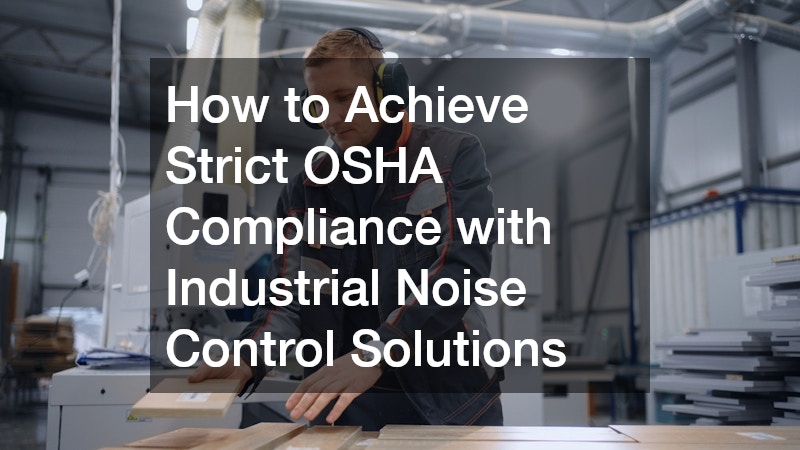

Occupational hearing loss remains one of the most common—yet entirely preventable—workplace illnesses in the manufacturing sector today. Unlike a sudden physical injury, hearing damage happens gradually, permanently altering a worker’s quality of life long after they have clocked out for the day. As a result, the Occupational Safety and Health Administration (OSHA) continues to crack down heavily on noise violations, handing out massive citations to facilities that fail to adequately protect their workforce. If your facility is relying solely on a box of cheap foam earplugs to keep your floor compliant, you are operating on borrowed time. Implementing highly engineered industrial noise control solutions is the only guaranteed, sustainable way to achieve strict OSHA compliance, safeguard your team, and protect your company’s bottom line.
Understanding the OSHA Standard
To properly fix the problem, you first have to understand exactly what the regulatory inspectors are measuring when they walk onto your floor. OSHA mandates a specific “Action Level” of 85 decibels (dBA) averaged over an eight-hour work shift.
Once your factory floor hits this threshold, you are legally required to implement a comprehensive Hearing Conservation Program, which includes mandatory annual hearing exams for your staff.
However, the absolute legal limit—known as the Permissible Exposure Limit (PEL)—is set at 90 dBA. To put that into perspective, a standard industrial air compressor, a heavy stamping press, or an industrial grinding station can easily exceed 100 dBA on their own. Crossing these regulatory thresholds is remarkably easy in a heavy manufacturing environment. The financial consequences of failing an acoustic audit are steep, with fines for repeated or willful violations rapidly scaling into the hundreds of thousands of dollars.
The Hierarchy of Controls and Why PPE Falls Short
A common and highly dangerous mistake made by facility managers is treating personal protective equipment (PPE)—like earmuffs and disposable earplugs—as the primary defense against dangerous decibel levels. This is a highly reactive, incomplete strategy that regulatory bodies actively penalize.
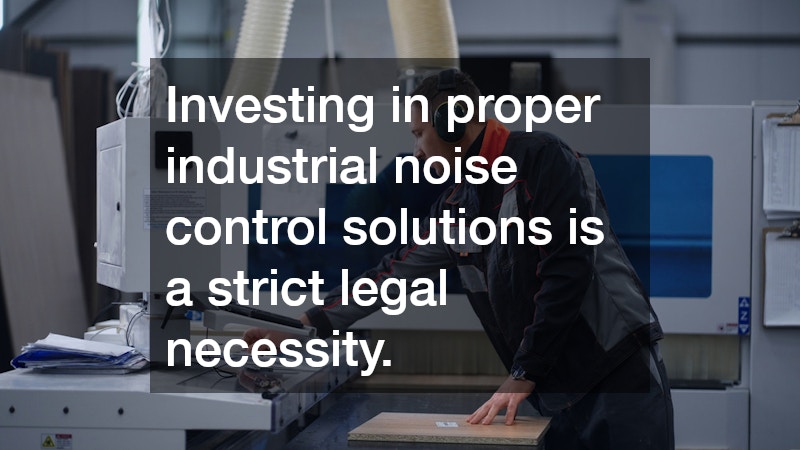
OSHA operates on a strict framework known as the “Hierarchy of Controls.” This legally mandates that employers must first attempt to eliminate or drastically reduce the hazard at the source using permanent engineering controls before falling back on PPE. Simply handing out earplugs is considered an absolute last resort, not a first line of defense. This regulatory mandate is exactly why investing in proper industrial noise control solutions is a strict legal necessity, rather than just an optional facility upgrade.
Three Proven Engineering Controls to Implement
When you need to physically alter your environment to dampen sound and comply with the Hierarchy of Controls, you have several highly effective engineering options. Here are three proven approaches to drastically lower your facility’s overall decibel levels:
-
Acoustic Machine Enclosures: One of the most effective ways to stop sound is to physically trap it at the source. By building a customized, sound-dampening box around your loudest, most aggressive equipment—such as massive generators, blowers, or heavy presses—you prevent dangerous sound waves from ever escaping onto the factory floor.
-
Suspended Baffles and Acoustic Wall Panels: Industrial environments are practically echo chambers, typically built from hard, reflective surfaces like concrete floors and corrugated steel ceilings. These rigid materials bounce sound waves around the room, severely amplifying the danger through constant reverberation. Strategically hanging absorbing materials, such as suspended ceiling baffles or heavy-duty wall panels, deadens this echo and drastically lowers the overall ambient volume of the room.
-
Silencers and Acoustic Louvers: Massive HVAC systems, exhaust stacks, and heavy-duty draft fans generate a tremendous amount of low-frequency airflow noise. Specialized silencers and acoustically treated louvers are designed to muffle this specific type of sound without choking off the vital airflow your plant needs to operate safely and efficiently.
By successfully combining these various industrial noise control solutions, facilities can often drop their ambient volume well below the 85 dBA Action Level entirely, removing the need for cumbersome PPE altogether.
The Financial ROI of a Quieter Plant
While avoiding massive regulatory fines is usually the primary driver for these facility upgrades, the benefits extend far beyond basic legal compliance. Shifting your operational focus toward a quieter facility has direct, positive impacts on your business.
First, drastically reducing workplace hazards naturally leads to fewer workers’ compensation claims related to degenerative hearing loss, which can significantly lower your annual insurance premiums. Furthermore, multiple industrial safety studies have proven that excessive, constant noise causes severe worker fatigue, increases miscommunication on the floor, and leads to expensive manufacturing mistakes. When you deploy the right industrial noise control solutions, you aren’t just checking a regulatory box; you are actively creating a more focused, highly productive, and profitable environment.
Wrapping Up
Protecting your workforce from permanent hearing damage is both a strict legal requirement and a fundamental moral obligation. Stop waiting for an unexpected audit to reveal the dangerous gaps in your safety protocols. By addressing the noise at the source with engineered acoustic treatments, you can permanently solve the problem and give your team a safer place to work.