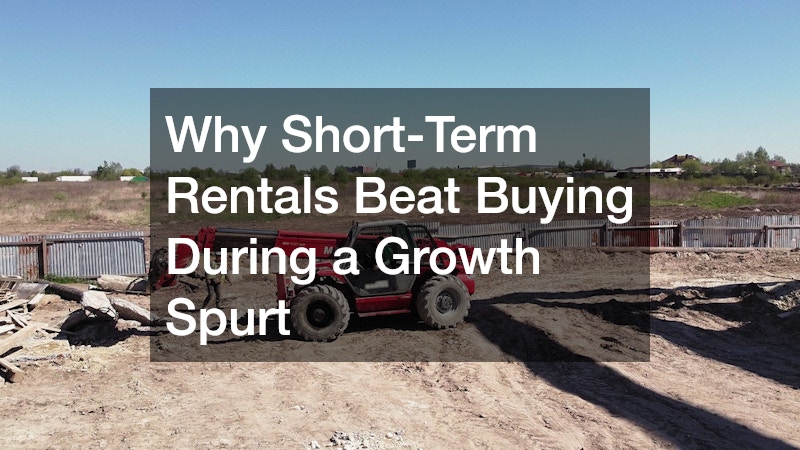

A sudden growth spurt, whether it’s a business expanding into a new space, a family needing extra room, or a property owner tackling a big renovation, creates pressure to act fast. The instinct is often to buy equipment, vehicles, or tools outright to handle the surge. But permanent purchases can lock up cash and leave you stuck with items you no longer need once the busy period passes.
Before committing to a big-ticket purchase, it’s worth understanding why flexible, short-term options often make more financial and practical sense.
Weighing the True Cost of Ownership Versus Renting
Buying equipment or a vehicle outright feels like a permanent solution, but the sticker price is only the beginning. Ownership brings ongoing costs like maintenance, insurance, storage, and eventual depreciation, all of which quietly chip away at your budget long after the initial purchase. When a growth spurt is temporary, such as a seasonal business boom or a short home renovation, these ongoing costs rarely pay for themselves.
Consider a delivery van purchased for $40,000 to handle a busy quarter. Beyond the loan payments, you’re covering commercial insurance, routine maintenance, fuel, and a parking or storage space when it’s not in use. Add depreciation of 15-20% in the first year alone, and the “asset” you bought starts looking more like a liability once demand cools off.
There’s also the opportunity cost to factor in. Capital tied up in owned equipment can’t be used for hiring, marketing, or inventory during the exact window when the business needs flexibility most. A short-term rental, by contrast, converts that unpredictable ownership burden into one predictable line-item expense with no long-tail costs waiting after the busy season ends.
Finally, think about resale risk. Equipment values can swing based on market conditions, technology upgrades, or wear and tear, meaning you may sell at a loss if the growth spurt ends sooner than expected. Renting sidesteps that gamble entirely, since the equipment simply goes back at the end of the term.
Ownership comes with a long list of hidden costs that rarely make it into the initial budget: property taxes, insurance, maintenance, repairs, and the steady drip of depreciation on equipment or vehicles. A piece of commercial equipment purchased for $50,000 might lose 15-20% of its value in the first year alone, regardless of how much you actually use it. Add financing costs on top, and the true price of ownership often runs 30-40% higher than the sticker price suggests.
Short-term arrangements shift that financial burden away from the owner. Instead of tying up capital in a depreciating asset, you pay only for the time you actually need it — whether that’s a month of warehouse space, a season’s worth of vehicles, or a short-term lease on office furniture during a hiring surge. There’s no resale headache when the growth spurt ends and no asset sitting idle on a balance sheet.
This frees up money for other priorities during a period when cash flow is often already stretched thin. Capital that would have gone toward a down payment or full purchase can instead fund hiring, marketing, or inventory. For a growing business, that flexibility often matters more than the theoretical long-term savings of ownership.
- Ownership costs include repairs, licensing, storage fees, and routine maintenance that add up fast during heavy use
- Unexpected breakdowns often hit hardest during peak growth periods, straining budgets when cash flow matters most
- Short-term use avoids long-term depreciation losses, since equipment value can drop 20-30% within the first year alone
- Renting preserves cash for other growth priorities like hiring, marketing, or inventory expansion
- Insurance costs are often lower or included with rental agreements, cutting out separate policy premiums and deductibles
- Renting also shifts liability for major repairs to the rental company, reducing unplanned expenses
Managing Debris and Cleanup During a Busy Period
Growth spurts almost always generate extra waste, whether it’s packaging from new inventory, old furniture from a home addition, or construction debris from an expansion project. Trying to handle this cleanup with regular trash service is usually slow and impractical, especially when volume spikes suddenly. A dumpster rental gives you a fast, scalable way to manage that overflow without committing to permanent waste infrastructure.
Because a dumpster rental is arranged for a set period, you avoid paying for capacity you don’t need once the project wraps up. Providers typically offer different container sizes, so you can match the rental to the actual scope of the job rather than guessing and overcommitting.
- Available in multiple sizes for small cleanups or large projects
- Delivered and picked up on a schedule that matches your timeline
- Eliminates the need to make repeated trips to a disposal site
- Helps keep job sites or renovation areas safe and organized
Handling Heavy Loads Without a Permanent Fleet
When demand increases quickly, moving materials, equipment, or inventory becomes a logistical challenge. Buying a truck or trailer to solve this problem might seem like the obvious answer, but it’s a costly one if the extra hauling need is temporary. Equipment trailers can be rented for exactly the stretch of time they’re needed, giving you the hauling capacity of ownership without the long-term financial commitment.
This approach also gives you flexibility to match the trailer type to the job. A landscaping business handling a seasonal surge in contracts, for example, might need a different trailer setup than a homeowner clearing out a garage during a move. Renting lets you select the right size and configuration each time, rather than being locked into one option.
- Avoids the cost of registration, storage, and maintenance for a trailer you rarely use
- Allows you to choose different trailer types for different jobs
- Reduces the risk of owning equipment that becomes obsolete
- Frees up garage or lot space that a purchased trailer would occupy
Scaling Tools and Machinery to Match Demand
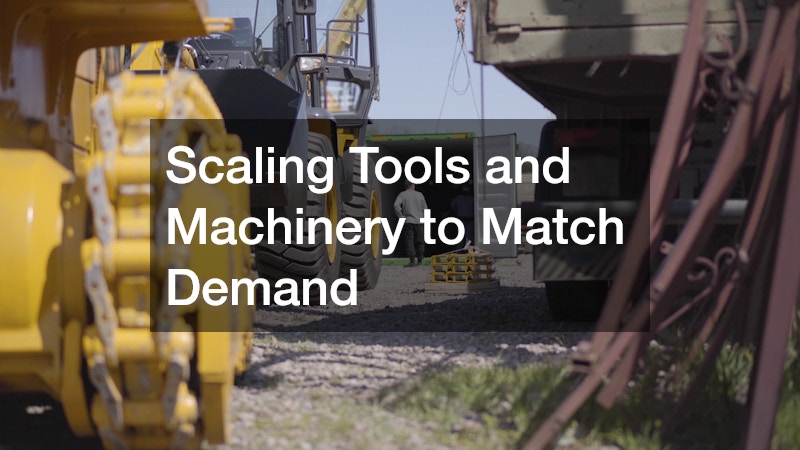
A growth spurt often means more work than your current tools can handle, whether that’s a construction crew needing extra machinery or a homeowner tackling a landscaping overhaul. Buying every tool you might need is expensive and often unnecessary once the surge in demand passes. Turning to equipment rental instead allows you to access specialized machinery only when the workload actually calls for it.
This is especially useful for specialized or expensive items that would otherwise sit unused most of the year. A concrete mixer, power washer, or aerial lift might be essential for a few weeks but a poor investment for occasional use. Renting these items keeps your budget focused on labor and materials rather than idle machinery.
- Access to newer, well-maintained machinery without upfront investment
- No need to budget for repairs or part replacements
- Ability to test different equipment before committing to a purchase
- Easier to scale up or down as the workload changes
Protecting Cash Flow During Unpredictable Growth
Growth spurts are exciting, but they’re also unpredictable. A business might not know if a busy season will repeat next year, and a homeowner might not know if a renovation project will expand in scope. Committing to large purchases during this uncertainty can leave you financially exposed if the demand doesn’t continue.
Short-term rental options act as a buffer against that uncertainty. By keeping costs tied to actual usage rather than fixed ownership, you maintain the flexibility to adjust quickly if circumstances change. This approach reduces financial risk while still giving you the resources needed to meet the moment.
- Keeps monthly expenses predictable and tied to real usage
- Reduces risk of being stuck with unused assets if demand drops
- Frees up capital for marketing, staffing, or other growth needs
- Makes it easier to pivot if project scope changes unexpectedly
Growth spurts test your ability to make smart, fast decisions without overcommitting resources you might not need long-term. Renting rather than buying gives you the flexibility to meet immediate demands while protecting your cash flow and avoiding the burden of ongoing ownership costs. Before your next big purchase, take a moment to evaluate whether a short-term solution could meet the same need with far less risk.