

Imagine being weeks into a multimillion-dollar commercial build. The foundation is poured, the framing is ready to commence, and your crew of forty workers is standing by on the clock. Suddenly, the machinery you secured arrives, and the operator realizes it lacks the necessary boom length to reach the center of your site. Work halts. The budget bleeds thousands of dollars by the hour, and the timeline is pushed back, causing a domino effect of delays with every subsequent subcontractor. This scenario is a project manager’s worst nightmare, yet it happens with alarming frequency across the construction sector. The machinery you choose, and how you procure it, acts as the heartbeat of your job site.
I. Introduction
In today’s fast-paced construction and development environment, purchasing large-scale machinery outright is rarely the most financially prudent choice. Buying requires massive upfront capital expenditure, incurs ongoing depreciation, and demands a dedicated budget for off-site storage, rigorous maintenance, and specialized insurance. Furthermore, owning limits your flexibility. A machine purchased for a specific commercial build might be completely useless for your next residential project. Renting, on the other hand, shifts these burdens, allowing project managers to turn fixed capital costs into flexible operating expenses while gaining access to the latest, most technologically advanced machinery on the market.
However, the process of securing temporary machinery is far more complex than simply calling a vendor and asking for a delivery. It requires a meticulous, multi-tiered approach to planning. A successful procurement strategy involves deeply understanding the physics of your specific build, rigorously vetting the safety and reliability of your potential partners, navigating complex logistical webs for delivery, selecting highly specialized tools for unique environments, and safeguarding your firm with ironclad legal agreements.
This comprehensive guide is designed to walk you through every single phase of the procurement process. Whether you are a seasoned site supervisor looking to refine your logistics or a newer contractor managing your first major commercial build, the insights provided here will equip you with the knowledge necessary to prevent costly delays, ensure absolute site safety, and keep your project running flawlessly from groundbreaking to final inspection.
II. Assessing Your Project’s Machinery Needs

Thorough preliminary planning is the most critical phase of the entire process. Failing to accurately define your project scope before reaching out to providers is the primary reason budgets inflate and timelines stretch.
Calculate Your Exact Load, Reach, and Digging Requirements
Before you even begin browsing catalogs, you must conduct a rigorous mathematical assessment of what you are actually trying to lift, move, or excavate. It is not enough to simply know the weight of the steel beams or concrete barriers you are handling. The physics of construction requires a much deeper calculation of dynamic forces and spatial limitations. A frequent error in heavy equipment rental is relying on estimates rather than exact engineering calculations, which immediately introduces safety hazards and the risk of catastrophic machinery failure.
To perfectly calculate your load and reach requirements, you must evaluate the following elements:
-
Maximum Static Weight: Determine the absolute heaviest single item that needs to be moved during the entire project lifecycle. This is your baseline metric.
-
Rigging Tackle Deductions: The weight of the lifting apparatus—including spreader bars, heavy-duty chains, shackles, and hook blocks—must be added to the weight of your load. A machine’s gross capacity must accommodate both the item and the rigging.
-
Maximum Radius: Measure the exact distance from the center pin of the machinery’s rotation to the final placement point of the load. The further away you place a load, the exponentially less weight the machine can safely handle.
-
Maximum Tip Height: Calculate the highest vertical elevation the machinery’s boom must reach, factoring in the clearance needed above the final placement spot to safely remove the rigging.
-
Dynamic Loads and Wind: Factor in environmental conditions. Wind speeds dramatically alter load stability, often requiring you to secure a machine with a higher capacity than your static weight suggests just to maintain a safe margin of error.
Match the Machinery Type to Your Specific Site Terrain
Once you know the weight and reach requirements, you must evaluate the ground beneath the machine. The most powerful lifting apparatus in the world is useless if the soil beneath it collapses under its outriggers or if it cannot maneuver into position. The ground conditions dictate everything about your selection, particularly when comparing different crane rentals to guarantee maximum stability and fluid maneuverability throughout the build.
Conduct a comprehensive soil and terrain audit using the following criteria:
-
Soil Bearing Capacity: Have a geotechnical engineer assess the ground’s ability to support immense localized pressure. Soft soil, sand, or recently disturbed earth will require specialized traction and potentially extensive site matting.
-
Topography and Gradients: Identify any slopes, trenches, or uneven surfaces. Some machines require perfectly level ground to operate safely, while others are engineered to articulate and stabilize on slight inclines.
-
Underground Utilities: Map out all subsurface infrastructure, including water mains, gas lines, sewer pipes, and underground electrical grids. The weight of large machinery can easily crush buried utilities, causing massive damage and municipal fines.
-
Surface Materials: Determine if the machine will be operating on finished asphalt (which can be permanently scarred by tracks), raw dirt, gravel, or a poured concrete slab. Your terrain dictates whether you need wheeled mobility or continuous track systems.
III. Evaluating the Provider’s Reliability and Fleet
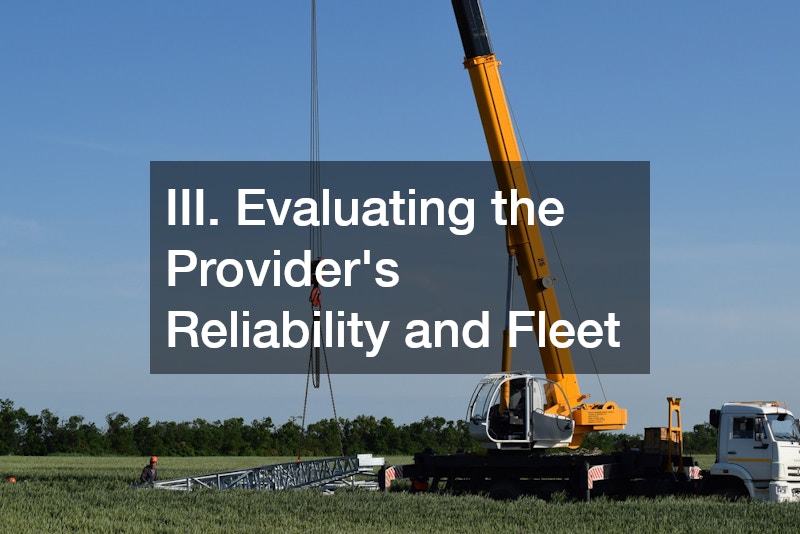
Once your engineering and terrain parameters are firmly established, the next step is to find a partner capable of fulfilling those needs safely. The vendor you select is not merely a supplier; they are an active participant in your site’s safety profile and operational efficiency.
Inspect Maintenance Logs Before Signing Any Agreements
The aesthetic appearance of a machine tells you very little about its mechanical integrity. A freshly painted exterior can easily hide degrading hydraulics, worn swing bearings, or compromised wire ropes. You must look under the metaphorical hood by demanding comprehensive, verified documentation. An elite equipment rental company is characterized by absolute transparency and will proactively offer documentation proving their fleet is meticulously maintained to the highest industry standards.
When evaluating a vendor’s maintenance protocols, insist on reviewing the following documents:
-
Annual Comprehensive Inspections: Request the most recent annual inspection report signed by an independent, certified third-party inspector.
-
Frequent and Periodic Logs: Ask to see the logs for daily, weekly, and monthly inspections. This reveals the vendor’s internal culture of preventative care.
-
Fluid Analysis Reports: High-quality vendors regularly test engine oil, hydraulic fluid, and coolant for microscopic metal shavings, which serve as early warning signs of internal component failure.
-
Emissions Compliance: Ensure the machinery meets current tier-rating emissions standards, especially if your project is located in an urban center with strict environmental air quality regulations.
-
Wire Rope Certifications: For any lifting machinery, the integrity of the wire rope is a literal matter of life and death. Demand logs showing regular lubrication, caliper measurements, and visual inspections for broken wires or core degradation.
Verify Operator Certifications and Provider Safety Records
If you are sourcing both the machinery and the operator (often referred to as a “manned” or “operated and maintained” agreement), the human element requires just as much vetting as the mechanical element. The person at the controls holds the lives of your ground crew in their hands. Consequently, you must thoroughly investigate the safety record and operational history of any crane company you are considering to ensure they treat risk management as their highest priority.
Focus your vetting process on these critical safety and qualification indicators:
-
NCCCO Certification: Ensure that every operator supplied holds current, valid certification from the National Commission for the Certification of Crane Operators (or your regional equivalent). This certification must be specific to the exact class of machinery they will be operating.
-
Experience in Similar Environments: An operator skilled in open-field pipeline work may not be equipped to handle the spatial awareness required for a high-density urban commercial build. Ask for resumes detailing the operators’ specific project histories.
-
OSHA Citation History: Search the Occupational Safety and Health Administration (OSHA) database for past citations, safety violations, or accident investigations associated with the vendor.
-
Experience Modification Rate (EMR): Ask for the vendor’s EMR. This number is used by insurance companies to gauge past cost of injuries and future chances of risk. An EMR under 1.0 indicates a safer-than-average company.
-
Drug and Alcohol Testing Protocols: Verify that the provider enforces a strict, randomized drug and alcohol screening program for all their field employees.
IV. Navigating Logistics, Site Preparation, and Delivery
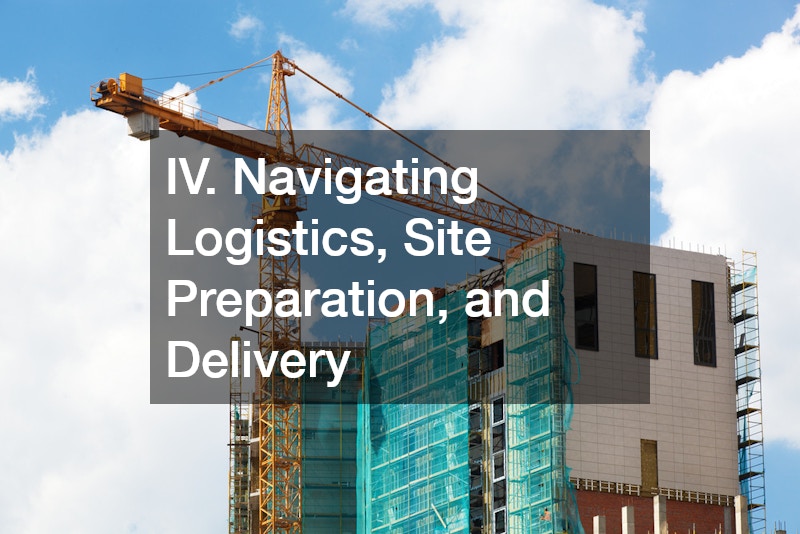
Securing the right machinery and a reliable provider is only half the battle. The logistical puzzle of safely transporting massive, oversized equipment from a vendor’s yard to the exact operational footprint on your site requires meticulous coordination.
Map Out Site Access and Clear Overhead Obstructions
Site preparation must be completed days, if not weeks, before the scheduled delivery. Large machinery cannot simply turn around if it encounters a blocked path or an unexpectedly narrow access gate. The sheer size and turning radius of these machines require an unobstructed runway. There is a distinct logistical advantage to utilizing local crane services for this phase, as domestic teams possess invaluable, firsthand knowledge of municipal road restrictions, bridge weight limits, and hyper-local route planning.
To guarantee a smooth arrival and setup, conduct a thorough site access audit:
-
Gate and Perimeter Measurements: Physically measure the width and height of all entry gates, temporary fencing, and access roads to ensure they exceed the maximum transport dimensions of the machinery.
-
Overhead Hazard Identification: Map every overhead obstruction, paying special attention to live electrical power lines, telecommunication cables, structural overhangs, and mature tree branches.
-
Turning Radius and Swept Path Analysis: Ensure there is adequate physical space for the delivery transport trucks (which are often extended lowboy trailers) to make wide turns into the site without hopping curbs or hitting adjacent structures.
-
Ground Bearing Pressure for Setup: Designate a specific setup zone and prepare the ground. This often involves laying down heavy-duty timber crane mats or composite pads to disperse the outrigger pressure and prevent the machine from punching through the soil.
-
Traffic Control Plans: If the setup process encroaches on public roadways, you must secure municipal lane closure permits, hire police details, and set up MUTCD-compliant traffic barricades well in advance.
Coordinate Delivery Schedules to Avoid Costly Downtime
Time management on a construction site is directly tied to budget preservation. Having massive machinery sitting idle on a crowded site because the preliminary groundwork isn’t finished is a massive waste of resources. Conversely, having a crew of ironworkers standing around waiting for delayed machinery to arrive is equally disastrous. The most sophisticated crane rental companies mitigate these risks by embedding themselves in your project management software to stagger deliveries and perfectly align machinery arrival with crew readiness.
Implement these scheduling best practices:
-
Off-Peak Transportation: Schedule the transport of oversized machinery during late-night or early-morning hours to avoid peak commuter traffic, minimizing transport delays and reducing the need for extensive highway escorts.
-
Staged Assembly: Recognize that massive machinery often arrives in multiple pieces on separate trucks. Allocate enough time and physical space for the setup crew to assemble the tracks, attach the counterweights, and pin the boom sections together before operational work begins.
-
Weather Buffers: Build weather contingencies into your rental schedule. High winds, lightning, and torrential rain will legally and practically halt lifting operations. Renting for an extra day upfront is often cheaper than extending a contract at the last minute due to a storm.
-
Pre-Lift Meetings: Schedule a mandatory orientation and safety meeting immediately upon the machinery’s assembly. This ensures the operator, the riggers, the signal persons, and the site supervisor are entirely aligned on the communication protocols and lift plans.
V. Selecting Specialized Machinery for Complex Builds

Not all projects happen on flat, open, easily accessible land. In fact, modern development frequently forces contractors to build in incredibly challenging environments. When standard machinery falls short, you must pivot to highly specialized equipment engineered to overcome severe spatial or environmental limitations.
Utilize High-Capacity Machinery for Urban High-Rises
Constructing a skyscraper in the heart of a densely populated metropolitan area presents a unique set of insurmountable challenges for standard mobile machinery. The site footprint is usually restricted to the absolute boundary of the building itself, leaving zero room for outriggers or wide swing radiuses. Furthermore, the vertical height of the build quickly surpasses the reach capabilities of ground-based booms. For these extreme vertical logistics, securing premier tower crane services becomes the mandatory backbone of the entire construction process, facilitating the continuous vertical transport of steel, concrete, and heavy mechanical units.
When planning for high-rise vertical transport, you must evaluate:
-
Freestanding vs. Tied-In Heights: Understand the maximum height the machine can operate safely while freestanding. Once the building surpasses that height, the mast must be physically anchored (tied-in) to the building’s structural steel or concrete core for stability.
-
Saddle Jib vs. Luffing Jib: If your airspace is restricted by adjacent buildings or overlapping swing radiuses, a luffing jib (which can raise and lower its arm to avoid obstacles) is legally and practically required over a standard horizontal saddle jib.
-
Base Foundation Engineering: These machines require incredibly complex, deeply poured concrete foundations, or they must be bolted directly into the building’s existing core structure. This foundation engineering must be approved months in advance.
-
Power Supply Requirements: These electric-powered giants require massive amounts of dedicated high-voltage power. You must ensure your site’s temporary electrical grid can handle the extreme amperage draw required during heavy, simultaneous hoisting and slewing operations.
Choose Tracked Machines for Muddy or Uneven Ground
Conversely, projects located in undeveloped, rural, or highly volatile terrain—such as wind farms, bridge constructions over rivers, or swampy industrial expansions—present the opposite problem. You have limitless space, but the ground itself is the enemy. Wheeled machinery will immediately sink, get stuck, or become dangerously unbalanced in deep mud or soft sand. For these ground-level environmental challenges, project managers must explore crawler crane rental services to guarantee their machinery maintains unyielding traction and absolute stability regardless of how compromised the terrain becomes.
The strategic advantages of tracked machinery include:
-
Superior Weight Distribution: Continuous tracks exponentially increase the surface area in contact with the ground. This disperses the immense weight of the machine and its load, significantly lowering the ground bearing pressure and preventing sinking.
-
Pick-and-Carry Capabilities: Unlike outrigger-dependent machinery that must be perfectly stationary to lift, tracked machines are uniquely engineered to lift massive loads and physically drive (crawl) across the site with the load suspended.
-
No Outriggers Required: Because their footprint is inherently stable, they do not require outriggers to be deployed. This allows them to operate in narrower physical corridors than their wheeled counterparts, provided the ground can support their tracks.
-
Mobilization Costs: It is crucial to note that tracked machines cannot be driven on public roads. They must be entirely disassembled, transported on dozens of flatbed trucks, and rebuilt on-site. You must heavily factor these extensive mobilization and demobilization costs into your budget.
VI. Understanding Contracts, Insurance, and Liability

The final, and arguably most critical, phase of procurement takes place in the office, not on the dirt. The legal and financial agreements surrounding massive construction machinery are incredibly dense and fraught with liability traps. A misunderstanding of contract terms or a gap in insurance coverage can bankrupt a contracting firm in the event of an accident or major mechanical failure.
Read the Fine Print on Damage Waivers and Hidden Fees
The base daily, weekly, or monthly rate advertised is never the final price you will pay. Rental contracts are layered with operational surcharges, maintenance clauses, and liability waivers that dramatically alter the total invoice. When analyzing quotes from various equipment rental services, you must aggressively scrutinize the terms and conditions to perform an accurate, apples-to-apples financial comparison.
Pay immediate attention to these easily overlooked contract clauses:
-
Bare vs. Operated Agreements: A “bare” agreement means you are only paying for the machine, and you assume total responsibility for maintenance, fueling, and providing a certified operator. An “operated and maintained” agreement includes the human operator and shifting the maintenance burden back to the vendor.
-
Shift Rates and Overtime: Most contracts assume a standard 8-hour workday, 40-hour workweek, and 160-hour month. If you run the machine for double shifts or weekend work, you will trigger massive hourly overage penalties. Ensure your contract aligns with your actual site working hours.
-
Environmental and Refueling Surcharges: If you return a machine without a full tank of diesel, the vendor will charge you a heavily inflated per-gallon refueling rate. Additionally, look out for non-negotiable “environmental disposal fees” tacked onto the final bill.
-
The Collision Damage Waiver (CDW): A CDW is not insurance. It is a fee paid to the vendor to waive their right to hold you responsible for specific types of incidental physical damage to the machine. Read the exclusions carefully, as CDWs almost never cover damage caused by gross negligence, overloading, or overturning.
Secure Adequate Insurance Coverage for the Entire Duration
Construction is inherently dangerous, and when gravity and massive tonnage are involved, the potential for catastrophic property damage or loss of life is severe. Relying solely on your standard commercial general liability (CGL) policy is a massive vulnerability. You must coordinate with your insurance broker and the legal teams of your chosen crawler crane rental services to ensure a seamless, overlapping blanket of coverage protects all parties.
Ensure your risk management portfolio includes the following specific coverages:
-
Inland Marine Insurance: Standard property insurance usually stops at your property line. Inland marine coverage specifically protects high-value mobile machinery and tools while they are in transit to your site and while they reside temporarily on your job site.
-
Rigger’s Liability: Standard CGL policies explicitly exclude damage to property that is “in your care, custody, or control.” If a steel beam slips from the rigging and is destroyed, your standard policy will not cover the cost of the beam. Rigger’s liability is specifically designed to cover the load itself while it is suspended in the air.
-
Additional Insured Endorsements: The vendor will legally require you to name their company as an “Additional Insured” on your liability policies. This protects them from lawsuits originating from accidents caused by your site conditions or your ground crew’s negligence.
-
Primary and Non-Contributory Phrasing: Ensure the insurance certificates dictate that your policy is primary and non-contributory. This means your insurance must pay out first in the event of an accident, without attempting to seek contribution from the vendor’s insurance policies, keeping legal disputes to a minimum.
VII. Conclusion
Successfully integrating massive lifting and earth-moving machinery into a construction project is a masterful balancing act of engineering physics, logistical foresight, and rigorous risk management. As we have explored, the journey from recognizing a need to executing a flawless lift involves far more than simply comparing daily rates. It requires you to calculate dynamic loads with absolute precision, ruthlessly interrogate the maintenance and safety cultures of potential partners, and engineer a site environment that prioritizes unobstructed access and stable ground conditions.
Furthermore, you must match the exact technological capabilities of the machinery—whether that involves the vertical dominance of tower structures or the unyielding traction of crawler tracks—to the specific spatial and environmental realities of your job site. Finally, you must protect your enterprise by deciphering dense legal contracts, exposing hidden fees, and closing dangerous gaps in your insurance coverage.
By treating the procurement process not as a simple vendor transaction, but as a critical strategic partnership, you safeguard your project’s timeline and budget. Keep these protocols, checklists, and technical considerations at the forefront of your project planning. When you prioritize preparation over speed, you transform the heaviest, most dangerous elements of your build into the most reliable and efficient assets on your job site.