

The moments immediately following a major vehicle collision are chaotic, disorienting, and flooded with a rush of adrenaline. Once the dust settles, the initial shock inevitably gives way to a daunting reality: the long, complex process of vehicle restoration. If you have recently been in a significant accident, it is completely normal to feel overwhelmed by the sheer volume of phone calls, insurance claims, and logistical hurdles that suddenly demand your attention. The anxiety of dealing with adjusters, the inconvenience of suddenly being without your primary mode of transportation, and the underlying fear of hidden repair costs can easily take a toll on your peace of mind. Your feelings of frustration and uncertainty are entirely valid.
The purpose of this guide is to serve as a comprehensive, step-by-step roadmap for what to expect during the vehicle restoration process. Knowledge is your best defense against feeling powerless in this situation. By understanding the intricacies of post-collision repairs, you can transition from a passive participant to an empowered advocate for your vehicle’s safety and your financial well-being.
Our core philosophy throughout this journey is anchored in three non-negotiable principles: uncompromising safety, absolute transparency, and restoring the vehicle strictly to its pre-accident condition without cutting a single corner. The metal, glass, and sensors of your vehicle are designed to protect human life, and compromising on their restoration is simply not an option. From the moment your vehicle is towed from the scene to the day you are handed back the keys, you need to know exactly what is happening beneath the surface. This extensive guide will walk you through everything from securing initial estimates and demanding deep mechanical inspections to scrutinizing the final cosmetic finish, ensuring you get back on the road safely and confidently.
- Secure Multiple Comprehensive Estimates Before Committing
- Demand Thorough Mechanical and Undercarriage Inspections
- Seek Specialized Expertise for Specific Makes and Models
- Prioritize Sensor Realignment and Climate Control Tests
- Scrutinize the Final Cosmetic and Interior Restoration
- Getting Back Behind the Wheel with Confidence
Secure Multiple Comprehensive Estimates Before Committing

One of the most critical stages in the aftermath of a collision happens before a single wrench is turned: the estimation phase. It is a common misconception that you must take your vehicle to the exact repair facility dictated by your insurance company. While insurance adjusters will often recommend their “preferred network” of shops, it is important to remember that these networks are sometimes established to keep insurance payouts as low as possible. You have the legal right to choose where your vehicle is repaired.
To protect yourself from being pushed into a quick, cheap fix, you must seek out multiple, highly detailed estimates. A superficial visual estimate, often conducted in a parking lot or via smartphone photos, is wildly insufficient for a major collision. Visual estimates only account for what is immediately obvious to the naked eye—a crumpled hood, a shattered headlight, or a bent fender. They do not account for the structural integrity of the vehicle. You must insist on a “tear-down” estimate. During a tear-down, technicians systematically remove damaged exterior panels to expose the underlying framework, suspension mounts, and internal components. This is the only way to reveal hidden damages that could severely compromise the safety and drivability of the vehicle.
When advising you on how to choose the right facility, it is worth noting that independent, highly rated local auto body shops often provide a much more personalized level of communication and customer advocacy than massive, high-volume corporate chains. You want a facility that is willing to fight the insurance company on your behalf to secure the necessary funds for a proper repair. Furthermore, look for a reputable auto body service that stands firmly behind their workmanship by offering comprehensive, lifetime warranties on their collision work.
Before handing over your keys and signing an authorization to repair, utilize this checklist of questions to gauge the shop’s credibility:
-
What certifications do your technicians hold? Look for industry-standard certifications such as ASE (Automotive Service Excellence) and I-CAR Gold Class, which indicate rigorous, ongoing training in modern collision repair techniques.
-
Will you use OEM (Original Equipment Manufacturer) or aftermarket parts? OEM parts are made by your vehicle’s manufacturer and guarantee an exact fit and safety standard, whereas aftermarket parts can be of highly variable quality.
-
Do you provide a written timeline and regular updates? A professional facility should offer a clear communication protocol, updating you via text, email, or phone at major milestones of the repair process.
-
How do you handle supplemental claims? When hidden damage is found after the initial estimate, the shop must file a supplement with the insurance company. Ask how they manage this process to prevent massive delays.
Demand Thorough Mechanical and Undercarriage Inspections
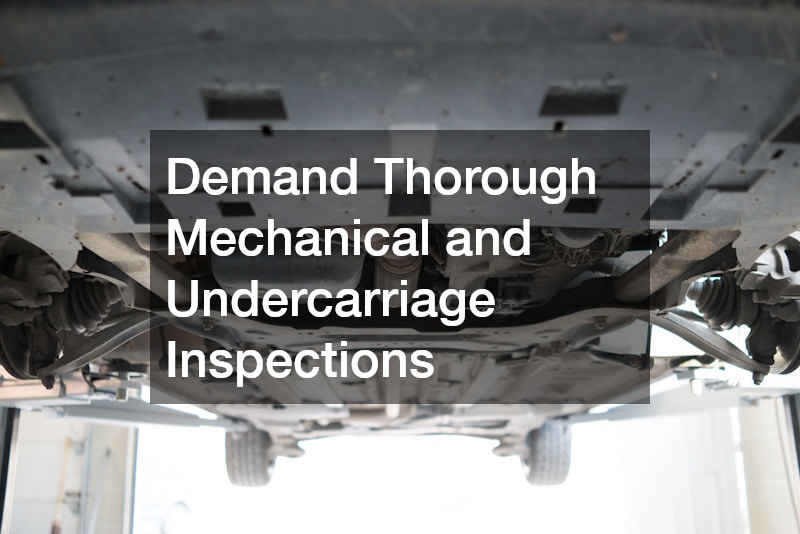
A vehicle that has been involved in a major collision might undergo extensive cosmetic work and emerge looking showroom-ready on the outside, but remain dangerously compromised on the inside. The kinetic energy generated during a crash is violently dispersed throughout the entire structure of the vehicle. This impact force does not politely stop at the exterior panels; it travels deep into the mechanical heart and structural skeleton of the car.
Because of this, you must demand that the repair facility conducts a rigorous mechanical and undercarriage inspection. The frame of the vehicle, which is the foundational structure that dictates how the car handles and how it will absorb a future impact, can be easily bent or twisted. Even a deviation of a few millimeters in the frame’s geometry can cause the vehicle to pull erratically to one side, cause uneven tire wear, and dramatically alter the deployment timing of the airbag system.
Beyond the frame, the suspension components—such as control arms, tie rods, struts, and sway bars—frequently snap, bend, or suffer hairline fractures during a collision. These components are responsible for keeping your tires firmly planted on the road. Additionally, a sudden, violent impact can sever critical fluid lines, including transmission cooler lines, fuel lines, and hydraulic lines. A sudden impact can severely compromise your vehicle’s stopping power, requiring a comprehensive brake repair service to ensure that the master cylinder, rotors, calipers, and hydraulic lines are structurally sound and completely free of leaks.
For those driving heavier, commercial, or utility vehicles, the mechanical stakes are even higher. The sheer mass and payload capacity of these vehicles mean their internal components are under immense stress even under normal conditions. It is vital to prioritize sourcing authentic, heavy-duty OEM truck parts rather than relying on cheap aftermarket alternatives that might buckle or fail under heavy loads or towing conditions.
A thorough mechanical restoration should always conclude with the following:
-
Comprehensive Diagnostic Scanning: The vehicle must be connected to a diagnostic computer to scan for deep, hidden error codes in the engine control module (ECM) and transmission control module (TCM).
-
Laser Frame Measuring: The facility should use computerized, laser-guided measuring systems to ensure the vehicle’s frame has been pulled and restored to the exact millimeter specifications set by the manufacturer.
-
Aggressive Road Testing: A simple drive around the block is not enough. The vehicle must be taken to highway speeds, subjected to hard braking, and driven over uneven surfaces to listen for clunks, rattles, or handling anomalies.
Seek Specialized Expertise for Specific Makes and Models
The automotive landscape has evolved dramatically over the last two decades. We are no longer living in an era where every vehicle is built using the same mild steel and basic combustion principles. Today, taking a complex, high-performance, or modern foreign vehicle to a generalist, run-of-the-mill repair center is a massive risk. You must seek out specialized expertise tailored to your specific make and model.
Modern vehicles utilize a complex tapestry of unique manufacturing materials. Many contemporary trucks and luxury sedans utilize aluminum-intensive bodies to save weight and improve fuel efficiency. Aluminum behaves entirely differently than steel; it does not have “metal memory,” meaning it cannot be easily hammered back into shape. It requires specialized heating techniques, dedicated tools (to prevent cross-contamination with steel shavings, which causes rapid corrosion), and specific rivet-bonding methods. Furthermore, high-end sports cars frequently incorporate carbon fiber and ultra-high-strength steel alloys that require incredibly precise welding temperatures. If a technician uses traditional steel welding techniques on these advanced materials, the structural integrity of the metal will be catastrophically weakened.
If you drive a high-end German, British, or Italian luxury vehicle, it is imperative that you insist a certified European auto mechanic oversees the complex drivetrain, suspension, and electrical repairs. These vehicles are engineered to incredibly tight tolerances and utilize highly proprietary, closed-loop software systems that a generalist simply will not understand. Similarly, specialized import auto repair centers that focus strictly on Asian or European markets generally have paid subscriptions for direct-from-manufacturer software, wiring diagrams, and technical service bulletins (TSBs) that are crucial for a safe and accurate repair.
Failing to use specialized, authorized technicians carries another significant risk: voiding your manufacturer’s warranty. If an unauthorized shop improperly repairs a structural component or splices into a complex wiring harness incorrectly, your dealership may refuse to honor future warranty claims related to those systems.
To ensure you are matching your vehicle with the right expertise, consider the following steps:
-
Verify Manufacturer Certifications: Look for shops that hold specific manufacturer certifications (e.g., Mercedes-Benz Certified Collision Center, Ford National Body Shop Network).
-
Inquire About Specialized Tooling: Ask the shop if they have the dedicated clean rooms, specialized welders, and proprietary diagnostic software required for your specific vehicle brand.
-
Discuss Material Handling: Have a candid conversation with the estimator about how they plan to handle the specific materials (aluminum, high-strength steel, carbon fiber) present in your vehicle’s construction.
Prioritize Sensor Realignment and Climate Control Tests
It is incredibly easy to fixate on the visible damage of a collision—the crushed fenders and the broken glass—and completely overlook the invisible, deeply integrated technological systems that run modern vehicles. Today’s cars are essentially rolling supercomputers, heavily reliant on a delicate network of sensors, cameras, and radars. In a major collision, particularly a front-end or rear-end impact, these sensitive components are almost always the first to take the hit.
You must act as a strong advocate for the technological and internal comfort systems of your vehicle. Let’s begin with the safety sensors. Modern safety suites—which control adaptive cruise control, lane departure warnings, blind-spot monitoring, and automatic emergency braking—rely on hardware strategically mounted in highly vulnerable areas. Radar units are typically hidden right behind the front plastic grille or bumper cover. Sonar sensors are embedded in the bumper fascias. Forward-facing cameras are mounted directly behind the rearview mirror against the windshield. Even a minor fender bender can knock a radar bracket out of alignment by a single degree. At highway speeds, a one-degree misalignment can cause your automatic emergency braking system to “see” a phantom obstacle in the next lane and slam on the brakes, or worse, fail to see a real obstacle directly in front of you.
Because of this extreme sensitivity, a highly documented, mandatory ADAS calibration must be performed by certified technicians before the vehicle is deemed safe to drive. This process involves using specialized targets and lasers to realign the cameras and radar to the vehicle’s thrust angle. Do not accept a repair where the shop claims the sensors “look fine” without providing a printed post-calibration report.
Equally vulnerable, yet frequently overlooked, is the vehicle’s climate control system. The most critical components of your heating and cooling systems are mounted at the very front of the engine bay, directly behind the grille. The condenser, which looks like a small radiator and is responsible for cooling the refrigerant, is incredibly fragile. The impact of a collision can easily crack the condenser’s delicate aluminum fins, pinch the high-pressure lines, or damage the compressor.
You must insist that the shop conduct thorough pressure tests and comprehensive car ac repairs before you accept the vehicle. It is incredibly common for a damaged cooling system to suffer a microscopic, slow leak. If the shop simply tops off the refrigerant without testing for pressure drops, the system might blow cold air when you pick up the car, only for the refrigerant to completely leak out two months later during the heat of summer, leaving you with a massive, out-of-pocket repair bill long after the insurance claim has been closed.
When discussing technological and climate restorations, demand the following:
-
Pre- and Post-Diagnostic Scans: You need printed proof that the computer systems were scanned for errors before the repair began, and scanned again to ensure all systems show “zero faults” upon completion.
-
Calibration Documentation: Ask for the exact readout showing that your vehicle’s Advanced Driver Assistance Systems were recalibrated to factory specifications.
-
Climate System Dye Test: Request that the shop injects a UV dye into the climate control system and pressurizes it to verify there are absolutely no hairline fractures or slow leaks in the condenser or lines.
Scrutinize the Final Cosmetic and Interior Restoration
After weeks of waiting, phone calls, and anticipation, the repair facility will finally notify you that your vehicle is ready for pickup. It is at this precise moment that you must exercise the most patience. Do not simply sign the final paperwork, pay your insurance deductible, and drive away. You must conduct a meticulous, unhurried final walk-around to scrutinize the cosmetic and interior restoration. Once you drive the vehicle off the lot, it becomes significantly harder to prove that a defect was the fault of the repair shop rather than a new incident.
Start your inspection with the exterior cosmetics, focusing heavily on the metalwork and paint. The goal of a proper repair is absolute seamlessness; you should not be able to tell where the old paint ends and the new paint begins. Inspect the vehicle in direct, natural sunlight if possible, as artificial garage lighting can easily hide imperfections. Look for “orange peel” (a bumpy, textured finish that indicates poor paint application), dust nibs trapped under the clear coat, or color mismatching. Pay close attention to how the shop handled the body lines. High-quality, modern auto dent repairs should leave the sheet metal completely smooth and perfectly contoured, utilizing techniques like paintless dent removal or proper metal pulling, rather than lazily filling the dent with excessive layers of plastic body filler that will eventually crack and peel.
Next, inspect the panel gaps. The spaces between the hood and the fenders, the doors and the quarter panels, and the trunk and the rear bumper should be perfectly uniform and parallel. If a gap is tight at the top and wide at the bottom, it is a glaring indicator that the frame was not pulled correctly or the panels were rushed during reassembly. Open and close every door, the hood, and the trunk several times. They should latch smoothly without requiring excessive force, and there should be no metal-on-metal scraping sounds.
Finally, shift your attention to the interior of the vehicle. A major collision often results in shattered glass, deployed airbags (which release a fine, pungent powder), and technicians in dirty coveralls moving in and out of the cabin. A reputable repair facility will not return a vehicle to you in a filthy state. Top-tier collision centers will often employ meticulous, professional auto detailers to thoroughly clean both the interior and exterior of the vehicle, vacuuming up microscopic glass shards, wiping down all plastic trims to remove sanding dust, and treating the upholstery to eliminate any lingering chemical odors from the paint booth.
Use this final checklist before signing the release forms:
-
Check the lighting: Turn on the headlights, high beams, turn signals, brake lights, and reverse lights to ensure all electrical harnesses were properly reconnected.
-
Inspect the wheels and tires: If your wheels were replaced or repaired, check for scuffs, ensure the valve stems are intact, and verify that the tires are inflated to the correct pressure.
-
Test interior functions: Roll every window up and down, test the radio, lock and unlock the doors, and run the windshield wipers to ensure nothing was accidentally unplugged behind the dashboard during the repair process.
Getting Back Behind the Wheel with Confidence
Recovering from a major vehicle collision is undeniably an exhausting marathon, not a sprint. It demands a significant amount of your time, a great deal of patience, and a willingness to stand firm and advocate for the quality of your vehicle’s restoration. By understanding the critical importance of comprehensive estimates, demanding deep mechanical inspections, seeking out specialized expertise, and prioritizing the alignment of your vehicle’s advanced technological sensors, you ensure that your safety is never compromised for the sake of convenience or cost-cutting.
It is crucial to manage your expectations throughout this process. Returning a heavily damaged vehicle to its pre-loss condition—structurally, mechanically, and cosmetically—takes considerable time. Delays related to parts availability or supplemental insurance approvals are common. However, maintaining a detail-oriented approach and thoroughly scrutinizing the final repairs will ultimately save you from future headaches and unexpected out-of-pocket expenses.
Moving forward, make sure to keep every piece of repair documentation, diagnostic scan readout, and calibration certificate neatly organized in a dedicated folder. This paperwork is vital for maintaining your vehicle’s warranties, dealing with any post-repair adjustments, and retaining the vehicle’s value should you choose to sell it in the future. Though the aftermath of a crash is a difficult road to navigate, armed with the right knowledge and a proactive mindset, you can get back behind the wheel with complete confidence, knowing your vehicle is just as safe and reliable as the day it first rolled off the assembly line.