
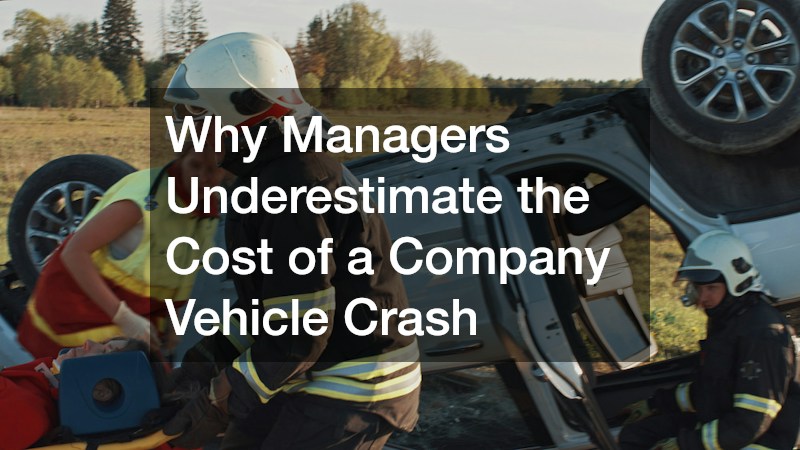

When a company vehicle is involved in a crash, most managers immediately think about the obvious expenses: a tow bill, a repair estimate, maybe a rental car. But the real financial impact of a fleet accident runs far deeper than the dented bumper, and it often surfaces weeks or months after the incident. Understanding the full scope of these hidden costs can mean the difference between a minor budget adjustment and a crisis that threatens the company’s bottom line. This article breaks down exactly where those costs hide and why so many businesses are caught off guard.
- Direct Repair Costs Are Only the Starting Point
- Downtime and Lost Productivity Add Up Quickly
- Medical Claims Can Dwarf Vehicle Damage Expenses
- Legal Exposure Grows Once Injury Claims Escalate
- Insurance Premiums Climb Long After the Incident
- Regulatory and Compliance Costs Often Go Unnoticed
- Reputational Damage Carries Its Own Financial Weight
- Proactive Planning Reduces the Financial Shock
Direct Repair Costs Are Only the Starting Point
Vehicle repair estimates tend to anchor a manager’s entire sense of what a crash will cost. A cracked windshield or crumpled fender might come in at a few thousand dollars, which feels manageable within a normal operating budget. The problem is that this number represents just one line item in a much longer invoice that unfolds over time.
Parts shortages, labor backlogs at repair shops, and the need for specialized commercial vehicle technicians can also push repair timelines and costs higher than initial quotes suggest. Many managers budget based on the first estimate without accounting for supplemental repair findings once a shop opens up the vehicle.
- Hidden frame or undercarriage damage discovered mid-repair
- Specialty parts for commercial-grade vehicles costing more than consumer equivalents
- Diagnostic and recalibration fees for modern safety systems
- Paint and finish work to match fleet branding standards
Downtime and Lost Productivity Add Up Quickly
Every day a company vehicle sits in a repair shop is a day it is not generating revenue or completing deliveries, routes, or service calls. Managers often underestimate how quickly this lost productivity compounds, especially when a single vehicle supports multiple daily tasks or a specific territory. The ripple effect can touch scheduling, customer satisfaction, and even employee morale if workloads get redistributed unevenly.
Replacement vehicles are not always a simple swap either. Renting a comparable truck or van, insuring it temporarily, and outfitting it with the same equipment can cost more than managers expect, and availability is not guaranteed on short notice.
- Missed delivery windows or service appointments
- Overtime pay for other employees covering the gap
- Customer attrition from delayed or canceled service
- Rental fees that exceed the original vehicle’s lease cost
Medical Claims Can Dwarf Vehicle Damage Expenses
When injuries are involved, the financial picture changes dramatically. Emergency room visits, imaging, physical therapy, and ongoing treatment for the other driver or passengers can quickly climb into tens or hundreds of thousands of dollars, particularly if injuries are serious or long-term. Many managers budget for property damage but fail to set aside realistic reserves for bodily injury claims, which almost always cost more.
This is often the point where the other party brings in a car accident attorney to make sure every medical expense, future treatment need, and lost wage is properly documented and pursued. A company that assumes medical costs will stay small is usually working from an outdated or incomplete picture of how injury claims actually unfold.
- Emergency transport and hospital stays
- Diagnostic imaging and specialist consultations
- Long-term rehabilitation or chronic pain management
- Lost wages for the injured party during recovery
Legal Exposure Grows Once Injury Claims Escalate
Once an injured party retains legal representation, the company’s exposure shifts from a straightforward insurance conversation to a formal legal process. Personal injury lawyers are skilled at calculating the full value of a claim, including pain and suffering, diminished earning capacity, and future medical needs that a company adjuster might otherwise overlook or minimize. This shift can catch managers off guard if they assumed the incident would settle quickly and quietly.
Legal costs are not limited to settlements or judgments either. Depositions, expert witness fees, and the company’s own defense attorney all add to the total bill, and these costs accrue whether or not the case ever reaches a courtroom. Managers who have never been through litigation often underestimate how slowly these cases move and how much that time costs in billable hours alone.
- Settlement negotiations that stretch over many months
- Expert witnesses for accident reconstruction or medical testimony
- Discovery costs including depositions and document review
- Defense attorney fees that accumulate regardless of outcome
Insurance Premiums Climb Long After the Incident
A single serious crash can affect a company’s commercial auto insurance rates for several years, not just for the policy term in which it occurred. Insurers reassess risk profiles at renewal, and a fleet with a recent at-fault accident, especially one involving injuries, often sees double-digit percentage increases. Managers sometimes treat the claim as a closed chapter the moment repairs are finished, when in reality the premium impact is just beginning.
Smaller fleets feel this more acutely because a single incident represents a larger share of their total claims history. A company with twenty vehicles and one major crash looks statistically riskier to an underwriter than a company with two hundred vehicles and the same single incident.
Regulatory and Compliance Costs Often Go Unnoticed
Depending on the industry and vehicle type, a crash can trigger mandatory drug testing, DOT reporting requirements, or internal safety audits that consume staff time and resources. Many managers are unaware of these obligations until the incident forces them to learn the rules in real time, often under pressure. Missing a reporting deadline can lead to fines that compound the financial damage from the crash itself.
Compliance costs also extend to retraining drivers, updating safety protocols, and sometimes responding to inquiries from regulatory bodies that monitor commercial vehicle safety records. These administrative burdens rarely show up in a manager’s initial mental tally of what a crash will cost the company.
- Mandatory post-accident drug and alcohol testing
- DOT or state-level incident reporting requirements
- Internal safety audits and policy reviews
- Driver retraining or recertification programs
Reputational Damage Carries Its Own Financial Weight
A branded company vehicle involved in a visible crash can generate negative attention on social media, local news, or customer review platforms, especially if the accident involved injuries or happened in a public area. This kind of exposure can quietly erode customer trust and make future sales or contract renewals harder to secure. Managers often focus so heavily on the tangible costs that they overlook how reputation damage translates into lost revenue over time.
Rebuilding a damaged reputation typically requires marketing spend, public relations effort, or proactive customer outreach, none of which were part of the original budget. These costs are harder to quantify than a repair bill, but they are just as real and can persist far longer.
Proactive Planning Reduces the Financial Shock
Companies that build realistic crash cost reserves into their budgets tend to weather these incidents with far less disruption than those that treat every crash as a one-off surprise. A good starting point is reviewing three to five years of internal incident data alongside industry benchmarks, since fleets of similar size and risk profile often show predictable patterns in frequency and severity. This means setting aside funds not just for repairs, but for potential injury claims, legal fees, replacement vehicle costs, and the premium increases that typically follow a reported at-fault accident. Many risk managers use a tiered reserve model, allocating smaller amounts for minor fender-benders and substantially larger sums for incidents involving injuries or third-party property damage. Some even factor in soft costs like lost productivity, driver downtime during investigations, and the administrative burden of handling claims paperwork, which can quietly add thousands of dollars to the total beyond what insurance covers. Building these line items into an annual budget, rather than treating them as unplanned expenses, keeps a single bad incident from derailing broader financial plans. If an incident does escalate into a legal dispute, the goal should be working with the best car accident attorney available to negotiate fairly rather than scrambling to find representation after the fact. Having a vetted attorney on retainer, or at least a shortlist identified in advance, shaves days or weeks off response time when a claim turns adversarial. Companies that wait until a crisis hits often end up paying premium rates for rushed legal help or settling disputes less favorably than they otherwise might. Establishing that relationship with a car accident attorney before trouble strikes is one of the simplest ways to turn a chaotic legal scramble into a manageable, well-coordinated response.
Fleet safety training, telematics monitoring, and regular driver record reviews also reduce the frequency and severity of incidents in the first place, which is the most effective way to control these costs long term. Telematics data, for instance, can flag harsh braking, speeding, or distracted driving patterns weeks before they result in a collision, giving managers a chance to intervene with coaching rather than paperwork. Many insurers also offer premium discounts of 5% to 15% for fleets that implement documented safety programs, which helps offset the upfront cost of training. Regular review of motor vehicle records matters just as much, since a driver with accumulating violations is a predictable liability long before a crash occurs. Pulling these records quarterly, rather than only at hiring, lets a company catch risk trends early and remove high-risk drivers from the road before they cause a six-figure claim. On the other side of a claim, injured parties are well served by seeking the best personal injury lawyer they can find, since fair compensation depends heavily on skilled representation. This matters for companies too: when the other party is well-represented, settlements tend to reflect the actual scope of damages rather than a lowball initial offer, which means a company’s reserves and insurance coverage need to be sized accordingly, not based on wishful thinking. A company that understands both sides of this equation is better positioned to manage risk honestly rather than hoping incidents simply will not happen. Building this into annual budgeting, rather than treating crashes as a surprise line item, turns a reactive scramble into a manageable, predictable cost of doing business.
- Build dedicated reserve funds for injury-related claims, targeting at least 3-5% of total payroll for driving roles
- Invest in telematics and driver monitoring technology to flag harsh braking, speeding, and distracted driving before they cause a crash
- Conduct regular driving record reviews (quarterly, not just at hire) for all fleet operators, including MVR pulls for violations
- Review insurance coverage limits annually, not just at renewal, especially after fleet growth or route changes
- Benchmark reserve and coverage levels against industry claim data, since average commercial crash costs often exceed $70,000 per incident
- Set clear escalation thresholds so repeat violations trigger retraining or removal from driving duties before an incident occurs
The true cost of a company vehicle crash extends well beyond the body shop invoice, touching everything from legal fees and insurance premiums to reputation and regulatory compliance. Managers who account for these hidden expenses in advance are far better equipped to protect their budgets and their teams when an incident occurs. Taking a clear-eyed look at every potential cost category now is the smartest step toward avoiding an unpleasant financial surprise later.